JOIN KANDY CLUB NOW

FREE EXPRESS SHIPPING ON ORDERS OVER $100

AFTERPAY AVAILABLE, BUY NOW PAY LATER

close button
Philtrum Piercing - SkinKandy | Body Jewellery & Piercing Online Australia

Philtrum Piercing

Medusa, Monroe and What to Expect

Quick answer: A philtrum piercing — also called a medusa — goes through the groove above your upper lip, centred directly below your nose. It downsizes at 2–4 weeks and takes a minimum of 4 months to fully heal. A Monroe is the same jewellery style placed off-centre on the upper left lip, not centred. 

If you've been searching "philtrum piercing" and ended up in a tangle of names - medusa, Monroe, Madonna, middle lip piercing and side labret - you're not alone. Many lip piercing names refer to different placements rather than different jewellery, which is where the confusion usually starts.

The philtrum sits right in the centre of your face, which makes it one of the most striking upper lip piercings you can get. It also means placement has to be exact.

Here's what you actually need to know before you book.
What's the Difference Between a Philtrum, Medusa and Monroe Piercing?

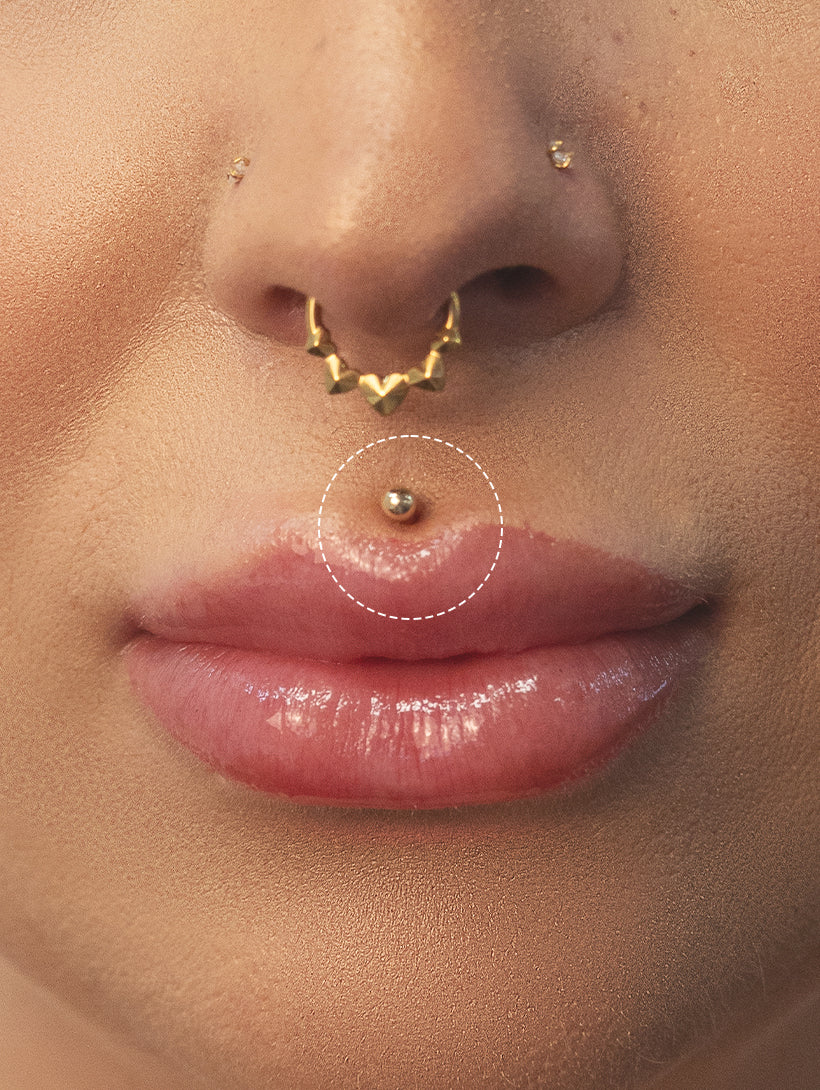
The philtrum is the anatomical term for the vertical groove between the base of your nose and the top of your upper lip. A philtrum piercing goes through that groove, centred on the midline of your face.

"Medusa" is the industry nickname. It refers to the exact same placement. You'll hear both terms used interchangeably at The Piercing Bar, and they mean the same thing.

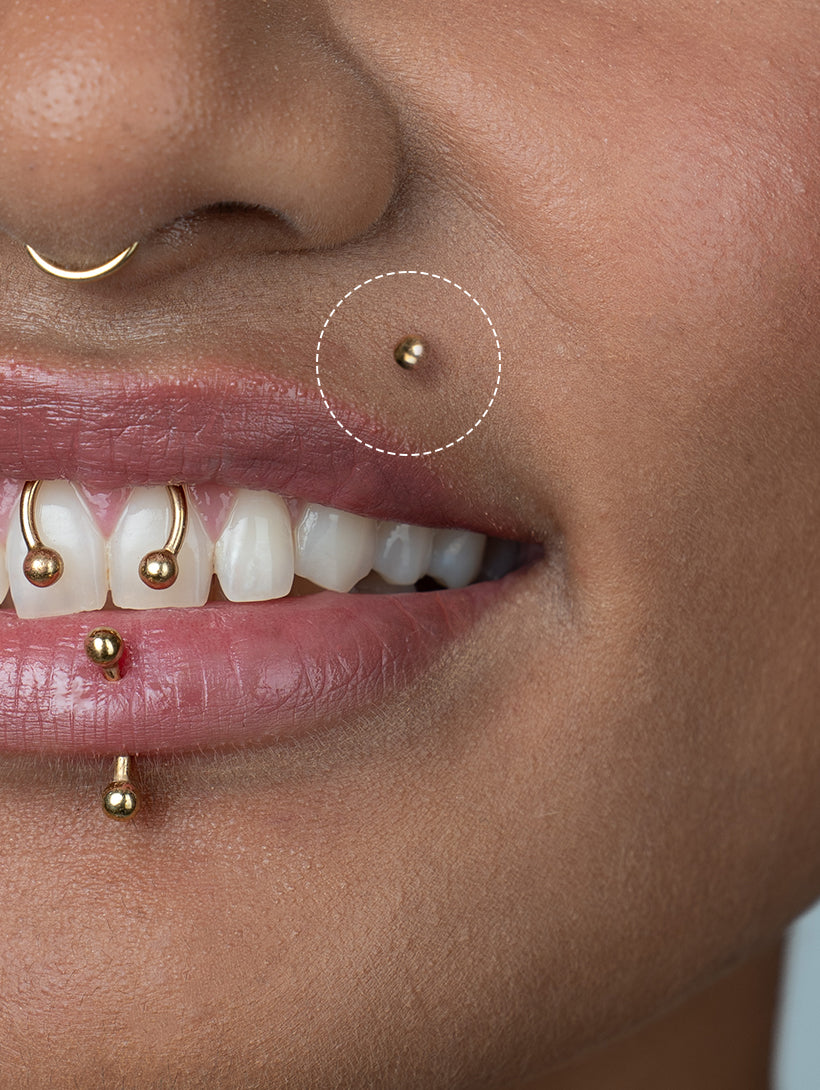
A Monroe piercing is different in one key way. It's off-centre, placed on the upper left side of the lip to mimic Marilyn Monroe's beauty mark. Some studios call the right-side version a Madonna. Both use the same flatback labret jewellery as a philtrum, just shifted across.

The full upper lip piercing family includes:

• Philtrum (Medusa) - centred above the upper lip, in the groove below the nose.
• Monroe - off-centre upper left.
• Madonna - off-centre upper right.
• Jestrum - a vertical version where the jewellery exits through the top of the lip.
• Middle lip piercing - a casual term most people use for the philtrum, not a separate placement.

If you're comparing all the lip piercing names in one place, our lip piercing guide covers labrets, verticals and more. The centred philtrum placement is the most requested of the upper lip group and the most anatomy-dependent.

Does a Philtrum Piercing Hurt?

Most people rate it a four or five out of ten. The tissue above the lip is fleshy, the needle passes quickly and the piercing is over in under a second.

What catches people off guard is the proximity to the sinus nerve network. Your eyes may water, not because of extreme pain but as a reflex response. It's involuntary, it's normal and it fades within a minute.

In our studios, many people tell us the anticipation is the hardest part. Once it's over, they're often surprised by how quick and straightforward the piercing actually was.

The days after are where you'll notice it more. Some tenderness and swelling around the entry point is normal, as is that specific awareness of having something new near your mouth.

The jewellery is fitted longer than you'll eventually wear it to allow for that swelling. It'll feel more noticeable at first, but that's expected and temporary.

The Philtrum Placement Mistake That's Easy to Miss

The philtrum sits directly below your nose, at the centre of your face. A placement that's even a millimetre off is much more noticeable than a slightly off-centre lobe or helix piercing.

The most common reason a philtrum piercing ends up looking slightly uneven is simple. The placement is marked before checking how your philtrum sits when you smile. Because the philtrum moves with facial expressions, a mark that looks perfectly centred at rest can appear off-centre once you raise your upper lip or show your teeth.

At SkinKandy, our piercing artists mark the placement while your face is relaxed, then check it again with a natural expression and a smile before any piercing begins. You'll confirm the placement in a mirror from multiple angles. If anything feels off, we'll adjust it. There's no rushing this step because it's something you'll see every day.

Lip shape and cupid's bow symmetry also influence the ideal placement. A shallow or narrow philtrum groove may require slight adjustments to achieve the best result. An anatomy check at The Piercing Bar only takes a few minutes and ensures the placement is right for you before you commit.

What Jewellery Goes in a Philtrum Piercing?

A flatback labret stud is the standard for this placement - a straight post with a flat disc sitting flush against the inside of the lip and a decorative top on the outside. The flat back keeps contact with your teeth and gums minimal, which matters for a piercing that lives near your mouth.

Every SkinKandy piercing includes a standard Surgical Steel flatback labret. The initial post is fitted longer than you'll eventually wear, to account for swelling in the first few weeks.

Once swelling settles, usually 2-4 weeks in, you'll come in for a downsize. A shorter post replaces the long one and sits correctly against the skin. This isn't a cosmetic step; leaving the long initial post in past the downsize window lets the jewellery move, which irritates healing tissue and makes the piercing look messier than it needs to.

For reactive or sensitive skin, Implant-Grade Titanium is the upgrade to consider. It's fully biocompatible and nickel-free, and it comes in anodised colours.

If you want something beyond a silver-coloured finish, 14K Solid Gold jewellery is also available as an upgrade.

Browse our philtrum jewellery or the wider flatback jewellery collection when you're ready to pick a downsize or healed piece. Small, low-profile tops - a tiny CZ stone, an opal or a simple bezel setting - tend to suit this placement best because the centred position frames the face without competing with the lip line.

How Long Does a Philtrum Piercing Take to Heal?

Healing happens in two stages, both of which are published on the SkinKandy piercing menu.

Downsize: 2-4 weeks. Once initial swelling has resolved, your piercing artist swaps the long starting post for a shorter one. Read more about why you downsize if you're not familiar with the process - it's one of the most skipped steps that causes the most problems.

Fully healed: minimum 4 months. At this point the tissue is stable enough for you to change jewellery without setbacks.

These are minimums. Individual healing varies depending on your immune response, your oral hygiene habits and how well you avoided touching it.

Many people find winter a little easier for healing facial piercings. Cooler weather generally means less sun exposure, less perspiration around the face and fewer opportunities to accidentally irritate a fresh piercing, which can support a smoother healing experience.

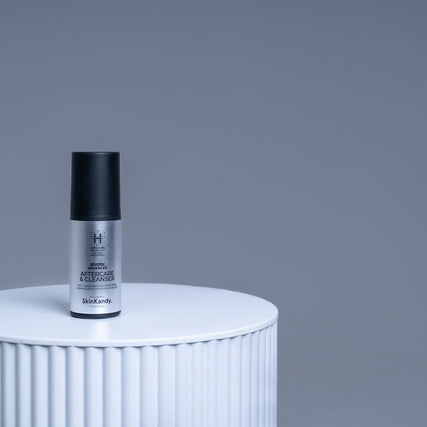
Aftercare is twice-daily saline spray on the outside and consistent oral hygiene on the inside. Avoid pools, spas and the ocean for at least 4-6 weeks. The full protocol is in our aftercare guide.

FAQs 

Does a philtrum piercing damage teeth or gums?

There's some risk of gum contact, which is why jewellery fit matters. The flat disc at the back of the labret sits against your gum line - if the post is too long or you press the jewellery with your tongue repeatedly, irritation can develop over time. Getting the right post length at consultation and at downsize keeps that contact minimal, and it's something your piercing artist manages at both appointments.

Can anyone get a philtrum piercing?

Most people can, but it's anatomy-dependent. The depth and definition of your philtrum groove, your lip shape and your gum health all factor into placement. If you have existing gum recession, your piercing artist may advise against it. A free anatomy check at any SkinKandy studio takes a few minutes and gives you a clear answer before you book.

How much does a philtrum piercing cost in Australia and New Zealand?

At SkinKandy, a philtrum piercing is $45 in Australia and $50 in New Zealand. This includes the consultation, anatomy check, standard Surgical Steel jewellery and aftercare guidance. Implant-Grade Titanium and 14K Solid Gold upgrades are available at an additional cost.

What's the difference between a Monroe and a Madonna piercing?

Both are off-centre upper lip piercings using the same flatback labret style. A Monroe sits on the upper left side (referencing Marilyn Monroe's beauty mark) and a Madonna sits on the upper right. The philtrum is the centred version of the same family.

When can I change my philtrum piercing jewellery?

You can change the decorative top at your downsize appointment (2-4 weeks in) while keeping the post length the same. Don't change the full jewellery yourself until the piercing is fully healed at 4 months minimum. Your first change after downsize is easiest done in studio where your piercing artist can confirm fit.

What's the minimum age for a philtrum piercing in Australia?

At SkinKandy, the minimum age for a philtrum piercing is 13 years. Anyone under 18 needs a parent or legal guardian present with valid ID for both parties.

Book Your Philtrum Piercing at SkinKandy

If a philtrum piercing has been sitting on your list, the piercing menu is a good place to start - it covers every placement we offer and what each includes.

Walk-ins are welcome at most studios, but booking ahead means you get time with a piercing artist who can do your anatomy check and placement consultation properly. With more than 100 studios across Australia and New Zealand, there's likely one close to you.