
Conch Piercing: Inner vs Outer & Healing
A conch piercing sits in the cup-shaped centre of your ear, named after the conch shell it resembles. Wear a stud in the inner conch or a hoop around the outer edge. Either way, expect it to hurt a little more than a lobe and a heal of at least six months.
Whether you're a piercing veteran or just upping your ear game, here's everything you need to know before you book. Every conch is pierced by a SkinKandy piercing specialist.
Pain is subjective, so treat this as a general guide rather than a guarantee of what you'll feel. Everyone's pain tolerance is different.
What Is A Conch Piercing?
A conch piercing goes through the deep central cartilage of the ear, called the 'concha'. There are two types, inner and outer, and the right one depends on the look you want and your anatomy. See our ear piercing placements guide for how the conch compares with other placements.
Inner Vs Outer Conch: Which One Suits You?
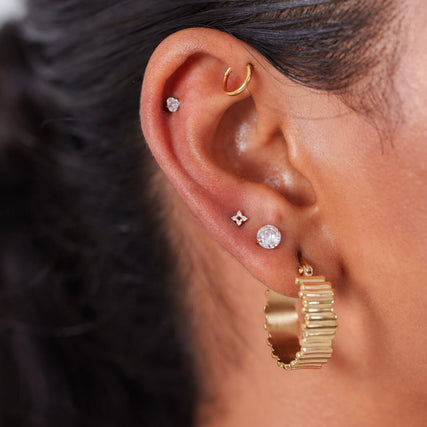
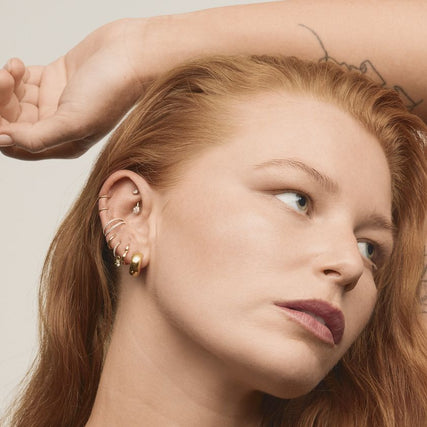
An inner conch sits in the central cup of your ear and suits studs. An outer conch sits on the flatter cartilage near the rim and suits hoops once healed.
Inner Conch Piercing
An inner conch piercing is done in the central part of the ear's cartilage, closer to the ear canal. Once healed, it can take a stud or a hoop that circles through the ear.

Outer Conch Piercing
An outer conch piercing is on the flat portion of cartilage between the helix (the outer edge of your ear) and the anti-helix (the inner ridge).
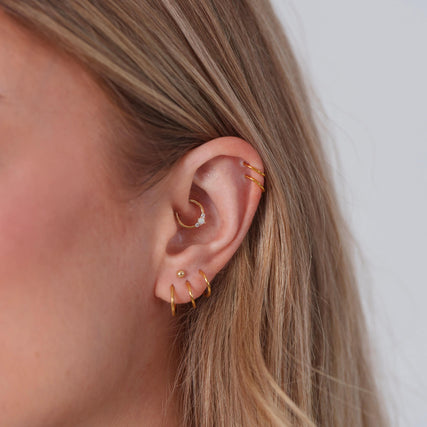
Can't decide? Why not both. They're great for mixing studs and hoops.

Do I Have The Right Anatomy For A Conch Piercing?
Most ears suit a conch, and your piercing specialist checks yours at your consultation. If you've got your heart set on a ring once it heals, tell them up front, as they'll need to position the piercing in just the right spot for it.
Does A Conch Piercing Hurt?
Cartilage is generally more painful to pierce than a lobe. We rate a conch 4 to 5 out of 10, and the piercing itself takes only moments. Pain is subjective, so treat this as a general guide rather than a guarantee of what you'll feel. Everyone's pain tolerance is different.
How Long Does A Conch Piercing Take To Heal?
A conch piercing takes a minimum of six months to fully heal, and up to 12. For other placements, see healing time by piercing type.
Redness, swelling, increasing pain, discharge, fever or nausea can be signs of infection. If it doesn't clear up with proper aftercare, contact your piercing specialist or see your GP.
When Can I Change My Conch Stud To A Hoop?
A conch starts with a flatback post or barbell, so a hoop comes later. Move to a ring once your conch is fully healed (a minimum of six months) and your piercing specialist agrees. Planning on a ring? Tell us at your consultation so we place the piercing with that in mind. Browse our hoops and huggies when you're ready.
How Old Do You Have To Be For A Conch Piercing?
If you're 13 to 15, you can get pierced with a thumbs-up from a parent or guardian. From 16 you can go solo, except in WA, where you need to be 18. Our ID and consent page has the full rules.
How Is A Conch Piercing Done?
Conch piercings are done with a 16-gauge flatback post or straight barbell. Your piercing specialist will recommend what's best for you, mark the spot and pierce with a sterile, single-use needle.
Conch Piercing Aftercare
Clean your conch with aftercare solution morning and night, keep it dry and avoid pressure on it. Our aftercare guide covers the full routine.
- 01In the shower, don't touch the piercing or get heavy with the soap. Let the water flow over it, then dry around it with a make-up pad or clean gauze.
- 02Once it's dry, give it a decent spray of aftercare solution without drowning it, then dry it again with a fresh pad. Do this morning and night.
- 03Don't touch it, and don't take the jewellery out for any reason unless your piercing specialist gives you the okay.
- 04Don't sleep on it, and avoid pressure from helmets and earphones.
- 05Avoid swimming and soaking in pools, the ocean or baths until your piercing specialist says it's safe.
Conch Piercing Jewellery
Titanium and 14K Gold suit a conch best. Studs and bars work while it heals, and hoops suit an outer conch once healed. From sleek Titanium, the go-to for durability and style, to Gold for sensitive skin, our conch jewellery collection has you covered.
- Studs: subtle, comfortable and perfect for an inner conch or for layering.
- Bars: sleek with a bit of edge. Smaller bars also suit an inner conch.
- Hoops: a great choice for an outer conch once healed.
- Hinged segment rings: easy to use, with a polished finish.
Conch Piercing FAQs
Can I Wear Headphones With A Conch Piercing?
It's best to avoid earbuds while a conch piercing heals. They press directly on the conch, and pressure is one of the main things that slows healing.
Can I Sleep On A Conch Piercing?
It's best not to sleep on a conch piercing until it's healed. Sleep on your other side and change your pillowcase regularly.
Can I Get My Conch Pierced With A Hoop Straight Away?
No. A conch starts with a flatback post or barbell, and you can move to a ring once it's fully healed and your piercing specialist agrees.
When Can I Swim After A Conch Piercing?
It's best to avoid swimming and soaking in the ocean, pools or baths while a conch heals. Your piercing specialist will let you know when it's safe.
Ready To Rock Your Conch?
Time to come out of your shell. Book your conch piercing online.
Want ideas for your next one? Browse our piercing menu for every placement we offer.
Book Now