
Belly Button Piercing: Healing Time, Types And Aftercare
A belly button piercing (also called a navel piercing) usually goes through the upper rim of your navel. It takes a minimum of 6 months to heal and suits most bodies once one of our piercing specialists has checked your anatomy. It's been a favourite since the 90s, and it's still going strong.
Here's what to know before you book: the types, the anatomy check, pain, age rules and aftercare.
- AT A GLANCE
- Traditional navel
- PAIN
- 3 to 4 out of 10
- METHOD
- Needle
- MINIMUM AGE
- 13 with a parent or legal guardian
- STARTER JEWELLERY
- 14 gauge curved navel bar
- DOWNSIZE
- 6 to 8 weeks
- FULLY HEALED
- Minimum 6 months, up to 12
Pain is subjective, so treat this as a general guide rather than a guarantee of what you'll feel. Everyone's pain tolerance is different.
What Is A Belly Button Piercing?
A belly button piercing goes through the rim of skin around your navel, most commonly the upper rim, with the jewellery sitting inside your belly button. 'Navel piercing', 'belly button piercing' and 'belly piercing' all mean the same thing.
Because it sits on your stomach, a lot affects how it heals: your waistband, how you sit and how your stomach folds when you bend over. That's why every belly button piercing at SkinKandy starts with an anatomy check.
Types Of Belly Button Piercings
The three main types are traditional (upper), lower and floating navel piercings, and your anatomy decides which will heal best.
Traditional (Upper) Navel Piercing
The classic. It's pierced through the upper rim of the navel, usually with a 14-gauge curved bar with a 5mm and an 8mm gem, or a gem on top and a smaller ball underneath, depending on your anatomy.
Lower Navel Piercing
This one goes through the lower rim instead. Lower navels are usually pierced with a 14-gauge curved barbell with two 4mm balls. You can have it on its own if your anatomy suits it, or pair it with a traditional navel.
Double Navel Piercing
Can't pick between upper and lower? A double navel is both: one piercing on the upper rim and one on the lower. With the right anatomy, it can also be a pair on either side.
Floating Navel Piercing
If your navel doesn't have a defined upper lip, a floating navel piercing may work instead. It's done on a slightly deeper angle with jewellery shaped for it (a J-like curved bar with a disc on the bottom), so nothing sits awkwardly in the navel.
Do I Have The Right Anatomy For A Belly Button Piercing?
Most people do, as long as your navel has a defined upper rim and enough depth behind it. Your piercing specialist checks this at your appointment, and the consultation and anatomy check are included in the price.
Contrary to popular belief, it has nothing to do with your weight or fitness level. It comes down to how your navel formed through childhood and puberty, and how your stomach creases when you sit or bend over. For a traditional navel, your piercing specialist is looking for:
- a defined upper rim, or 'lip', above the navel
- enough depth behind it for the jewellery to sit comfortably
- how much the area folds when you sit down
If a traditional navel isn't going to heal well on your anatomy, we'll tell you and talk you through the options, like a lower or floating navel.
How Long Does A Belly Button Piercing Take To Heal?
A belly button piercing takes a minimum of 6 months to fully heal, and it can take up to 12. Everyone heals at their own pace. Your aftercare, your immune system and the quality of your jewellery all play a part. For how it compares with other placements, see healing time by piercing type.
Tight waistbands, sleeping on your stomach, swimming too soon and changing your jewellery early can all slow healing down.
Does A Belly Button Piercing Hurt?
Most of our clients describe a quick, sharp pinch that's over as soon as the piercing is done. We rate a traditional navel piercing 3 to 4 out of 10. Pain is subjective, so treat this as a general guide rather than a guarantee of what you'll feel. Everyone's pain tolerance is different. Expect some soreness for a few days afterwards while it settles, and follow your aftercare from day one to keep it to a minimum.
How Old Do You Have To Be To Get A Belly Button Piercing?
You can get a belly button piercing from 13 with a parent or legal guardian's consent. They'll need to stay in the studio for the appointment and bring their own photo ID. From 16 you can consent yourself, except in WA, where you need to be 18. If you look under 25, bring photo ID. Our ID and consent page has the full rules.
How Is A Belly Button Piercing Done At SkinKandy?
It's quick and simple, and every piercing is done by a SkinKandy piercing specialist. Here's how it goes:
- 01Consultation and anatomy check. Your piercing specialist looks at your navel, including how it folds when you sit, and helps you choose your starter jewellery.
- 02Marking. They mark the placement and check you're happy with it before going ahead.
- 03Lie back. You'll lie down for the piercing.
- 04Piercing. It's done with a sterile, single-use needle and your jewellery goes straight in.
- 05Aftercare rundown. Before you leave, your piercing specialist talks you through how to look after it.
Belly Button Piercing Aftercare
Good aftercare does most of the work. Your piercing specialist will give you full instructions, and our aftercare guide covers the lot. The essentials:
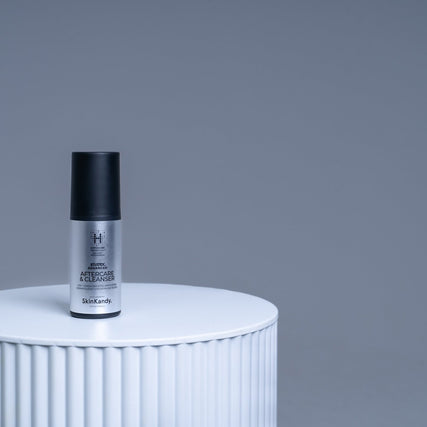
- 01Clean it twice a day with sterile saline only. We stock sterile saline spray in every studio.
- 02Wash your hands before touching anything near the piercing.
- 03Check your jewellery is secure during your daily clean, but don't twist, turn or play with it. That irritates the piercing and brings in bacteria.
- 04Dry it properly. A navel is a tight spot, so a handheld electric fan helps. Moisture slows healing.
- 05Skip tight clothing and high waistbands while it heals, and watch for snags from belts and bags.
- 06Try not to sleep or lie on your stomach. Pressure can cause irritation and migration.
- 07Keep oils, creams and fake tan away from the piercing.
- 08Stay out of pools, the ocean, lakes and baths until your piercing specialist says it's safe. If you can't avoid swimming, a waterproof patch over the piercing helps.
- 09Leave your starter jewellery in until you're fully healed. Not sure if you're there yet? Visit any studio for a free check-up.
Is My Belly Button Piercing Infected Or Just Healing?
Some redness, tenderness, swelling and a little bleeding are normal in the early weeks. Infection is unlikely if you look after it, but it helps to know the difference.
If you're worried, come and see us in the studio or book in with your GP. Don't take the jewellery out unless your piercing specialist or doctor tells you to.
What Jewellery Goes In First, And When Can I Change It?
Your starter jewellery is chosen to suit your anatomy: usually a curved navel bar for a traditional navel, a curved barbell or double gem navel bar for a lower navel, or purpose-made floating navel jewellery. Implant-Grade Titanium and 14K Gold are the top picks if you have sensitive skin or allergies.
Once you're fully healed, you can have some fun. Navel bars with a decorative top and bottom are the most popular style, dangles add a little movement and navel rings, a Y2K favourite, are well and truly back. Browse our navel piercing jewellery when you're ready. Just don't switch to fashion jewellery or rings before your piercing specialist says you're healed.
Belly Button Piercing FAQs
Can I Get A Belly Button Piercing While Pregnant?
We don't pierce during pregnancy. Your body is already working hard, and a new piercing carries a higher risk of infection and may not heal well. After birth, we recommend waiting at least six months before getting pierced.
Can I Wear High-Waisted Jeans Or A Belt While It Heals?
It's best not to. Our aftercare guide recommends avoiding tight clothing for the whole healing period, and a waistband or belt sitting on the piercing can rub, snag and slow healing. Looser, lower-sitting clothes are your friend for now.
Can I Take My Belly Ring Out For A Medical Appointment?
Talk to your piercing specialist first. A belly retainer is designed to keep the piercing open for a short time when you can't wear metal jewellery, so you don't lose it.
Can I Use Fake Tan, Sunscreen Or Creams Near A New Piercing?
Keep oils, creams and fake tan off a new piercing while it heals. They can irritate it and raise the risk of infection.
Book Your Belly Button Piercing
Ready to go? Fill in our online booking form and we'll check your anatomy, help you choose your jewellery and get you pierced. Walk-ins are welcome at most studios, and you can find your nearest studio here.
Not sure which piercing is right for you? Browse our piercing menu for every placement we offer.
Book Now