Ear Piercing Names: Every Placement Explained - SkinKandy | Body Jewellery & Piercing Online Australia

Ear Piercing Names: Every Placement Explained

Quick answer: Ear piercing names refer to the different placements across your ear, from the soft lobe to the outer rim and inner cartilage. Common placements include the lobe, helix, forward helix, flat, tragus, conch, daith, rook, snug and industrial. The right piercing depends on your ear anatomy, the jewellery you want to wear and the look you're trying to create.

If you've ever found yourself wondering whether the piercing you want is called a flat, a helix or a rook, you're not alone. Once you move beyond the lobe, the number of ear piercing names grows quickly, and most charts make it seem like every placement works for every ear.

At the Piercing Bar, we start with your anatomy before recommending a placement. The name of the piercing matters far less than whether your ear can comfortably support it and help you achieve the look you're after.
What Do All the Ear Piercing Names Actually Mean? 

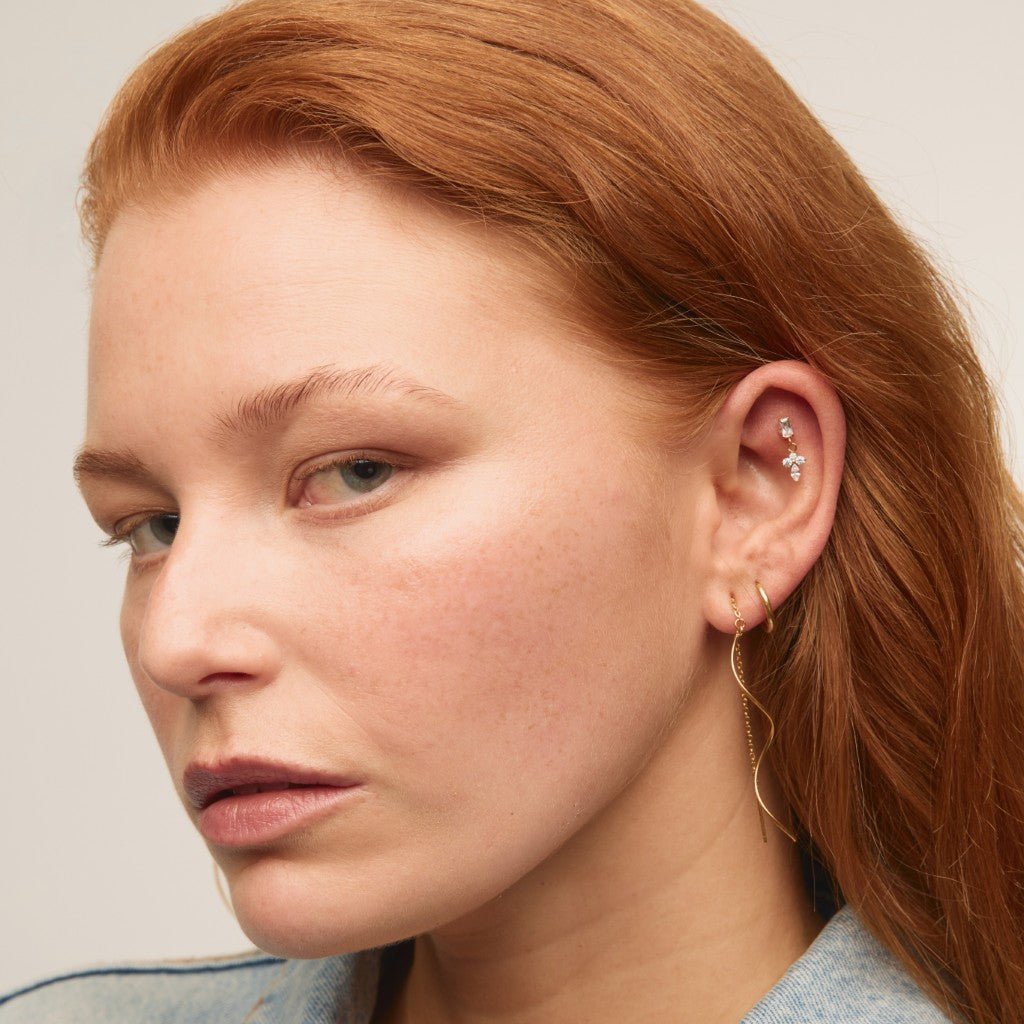
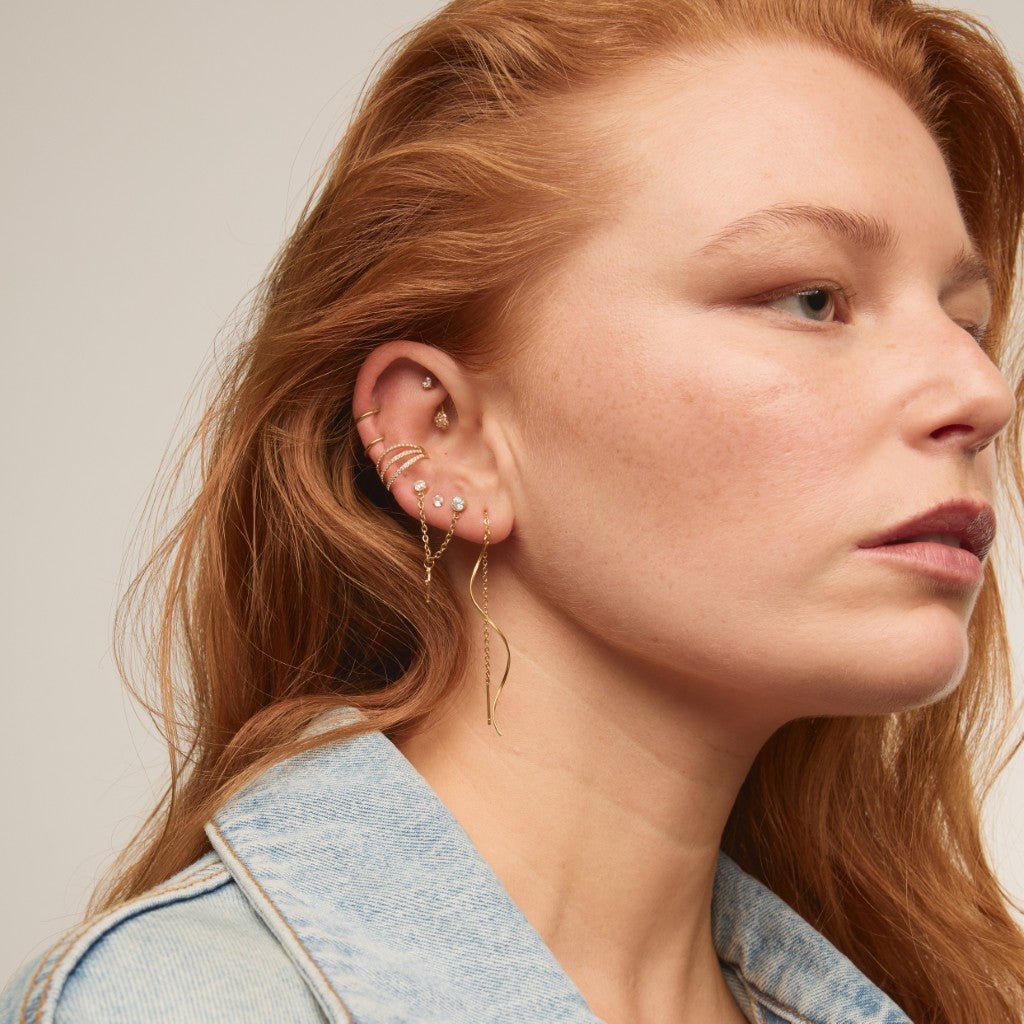
Every ear piercing name refers to a specific placement on the ear. Lobe piercings sit in the soft tissue at the bottom of the ear, including first, second, third, upper and stacked lobe piercings. The rest of the ear is cartilage, where placements such as the traditional helix, forward helix, vertical helix, hidden helix, flat, rook, daith, conch, tragus, anti-tragus and snug each sit on a different fold or ridge. Multi-point piercings, like an industrial, connect two placements with a single piece of jewellery. 

We see the same mix-up most weeks at the Piercing Bar. Someone arrives asking for a rook because they liked a photo they'd seen online, only to realise the placement they're pointing to is actually closer to a flat. 

An anatomy check helps match the name you're looking for with the placement that best suits your ear before any piercing begins. If you'd like to learn more about individual placements, explore our Piercing Info guide for detailed healing advice, jewellery options and aftercare. 

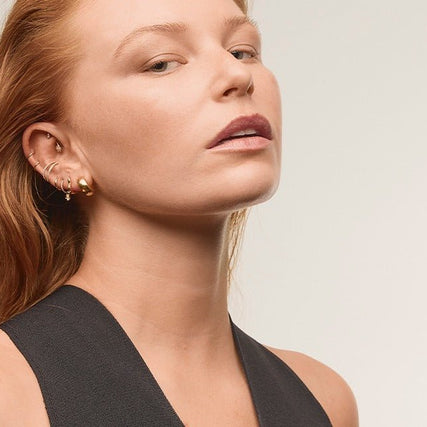
More guests are choosing two or three piercings in one appointment rather than a single statement piece. Spacing those placements across different areas of the ear, such as the lobe, flat and tragus, often creates a more balanced ear stack than clustering several piercings in the same section. Understanding the different ear piercing names makes it much easier to plan that look with your piercer. 

Flat vs Helix: How to Tell These Placements Apart 

Helix and flat piercings are often confused because they both sit in the upper ear cartilage. A helix piercing sits on the outer rim of the ear, while a flat piercing sits on the broad, flatter area of cartilage just inside that rim. 

The biggest difference is the jewellery they suit. A helix can usually be worn with studs or rings once fully healed, while a flat is typically best suited to stud-style jewellery because there isn't enough outer edge for a ring to sit comfortably. 

Your lifestyle can also influence which placement is the better choice. If you regularly wear over-ear headphones, helmets or anything that puts pressure on the side of your ear, mention it during your consultation. Some placements may be more prone to irritation during healing depending on your anatomy and how those items sit against your ear. 

Not every ear has the same amount of flat cartilage. Some people have plenty of space for a statement flat piercing, while others have a more curved ear shape that limits the available area. An anatomy assessment helps determine which placement will heal well, look balanced and give you the jewellery options you're after. 

Titanium Internally Threaded Cubic Zirconia Rectangular Marquis Dangle Flatback - SkinKandy | Body Jewellery & Piercing Online Australia
Titanium Cubic Zirconia Triple Segment Ring - SkinKandy | Body Jewellery & Piercing Online Australia

The Biggest Mistake People Make Choosing Ear Piercing Spots 

The biggest mistake we see is choosing an ear piercing based on a photo of someone else's ear. A daith that sits perfectly in one person's well-defined cartilage fold can look completely different on someone with different anatomy. In some cases, the jewellery from the reference photo may not even be suitable. 

Your ear anatomy determines what will look balanced and heal well, not the picture saved on your phone. 

That's why every piercing starts with an anatomy assessment. We look at the shape of your ear, the depth of the cartilage folds and the available space before recommending the best placement, rather than simply copying a photo. 

Daith piercings are one of the best examples. They rely on having a well-defined fold of cartilage, and not every ear has anatomy that's suitable. An anatomy assessment helps determine whether a daith is the right choice or whether another placement will achieve a similar look that's better suited to your ear. 

Studs, Hoops or Flat-Backs: What to Wear in a Fresh Piercing 

A flat-back stud is the best choice for most fresh ear piercings. It sits securely against the ear with minimal movement, helping to reduce irritation while the piercing heals. Browse our flat-back jewellery collection to explore the styles we offer.

Rings and hoops move more than studs, especially when sleeping, brushing your hair or changing clothes. That extra movement can irritate a healing piercing and make recovery take longer, which is why we generally recommend waiting until your piercing is fully healed before switching to a ring, unless your piercer advises otherwise.

What we recommend, placement by placement:

First and second lobe: A Surgical Steel flat-back stud, the standard jewellery included with every SkinKandy ear piercing.

Helix, flat and tragus: An Implant-Grade Titanium flat-back stud is an excellent option if you have sensitive skin or prefer a premium jewellery upgrade.

Conch: A flat-back stud fitted with enough room to accommodate initial swelling, then downsized by your piercer once appropriate.

Rook and daith: Curved barbells or captive bead rings are commonly used depending on your anatomy and your piercer's recommendation.

Fully healed piercings: Once your piercer confirms your piercing is fully healed, you can explore rings, huggies or solid gold jewellery to change your look safely.

How Long Each Ear Piercing Takes to Heal 

Healing happens in two stages, not one. Downsizing is when your piercer replaces the initial jewellery with a shorter post once swelling has settled. Fully healed means the piercing has matured enough to safely change jewellery without disrupting the healing process. 

Lobe piercings are typically downsized after 6 to 8 weeks and are generally fully healed after a minimum of 3 months. Most cartilage piercings, including the helix, flat, conch, tragus and rook, are also commonly downsized after 6 to 8 weeks but usually require at least 6 months to fully heal. Industrial, snug and anti-tragus piercings can take longer due to their anatomy, while daith piercings vary depending on the individual and should be assessed by your piercer before changing jewellery. 

Healing time isn't determined by the gauge of the jewellery. It's influenced by factors such as the type of tissue being pierced, your anatomy, aftercare, overall health and how much movement or pressure the piercing experiences during healing. 

Warm weather, swimming and increased perspiration can make aftercare more challenging. If you're healing a piercing during summer, take extra care to keep the area clean and avoid pools, spas and the ocean until your piercer advises it's safe. 

Clean your piercing with sterile saline solution twice a day, avoid touching or twisting the jewellery, and follow your piercer's aftercare advice throughout the healing process. If you have concerns about swelling, irritation or delayed healing, book a review with your piercer. 

Read our Aftercare Guide for detailed cleaning instructions and healing advice. 

FAQs 

What is the least painful ear piercing? 

Lobe piercings are generally considered the least painful ear piercings because they pass through soft tissue rather than cartilage. Pain still varies from person to person, so your anatomy and individual pain tolerance will influence the experience.

What's the difference between a flat piercing and a helix piercing? 

Wait until your piercing is fully healed, which is at least 6 months. Stretching should always be done gradually, increasing one size at a time and allowing the tissue to settle between each size.

How long does an earlobe piercing take to heal? 

A first, second, or third lobe piercing is typically downsized after 6 to 8 weeks and is generally fully healed after a minimum of 3 months.

Can I wear hoops in a new ear piercing? 

Most new ear piercings heal best with the jewellery recommended by your piercer. For many placements, a flat-back stud moves less than a hoop, helping to reduce irritation during healing. Once your piercing is fully healed, your piercer can let you know whenit's suitable to change to a ring.

How much does an ear piercing cost? 

A standard single ear piercing starts from $45, including your consultation, anatomy assessment and Surgical Steel jewellery. Two standard ear piercings start from $80.

Can a cartilage piercing reject or migrate? 

Although uncommon, cartilage piercings can migrate if they're placed incorrectly, experience ongoing pressure or trauma, or aren't suitable for your anatomy. Following your piercer's aftercare advice and attending your downsize appointment helps minimise the risk.

Find Your Nearest Studio

If you're ready to get pierced — or just want an anatomy check before you commit — see our piercing menu for the full list of placements and pricing. We have 100+ studios across Australia and New Zealand.

Walk-ins are welcome at most studios. For a stacking consultation or a more involved placement, booking ahead gives you more time with the team.