Stretch Nostril Piercing or Change Placement? Here's the Call - SkinKandy | Body Jewellery & Piercing Online Australia

Stretch Nostril Piercing or Change Placement? Here's the Call


Quick 
answer: 
You can stretch a fully healed nostril piercing safely, one size at a time, but most people asking about it actually want a bolder look rather than a bigger hole. A different placement, a dangle or a switch from stud to ring often gets there faster and without stretching healed tissue. 

If you've searched "stretch nostril piercing", there's a good chance what you're really picturing is a bolder look, not a wider one. Before booking a stretch, it's worth understanding the difference between traditional and high nostril placements, because where your piercing sits influences the jewellery you can wear, how it heals and your styling options in the future. 

What's the difference between a traditional and a high nostril piercing? 

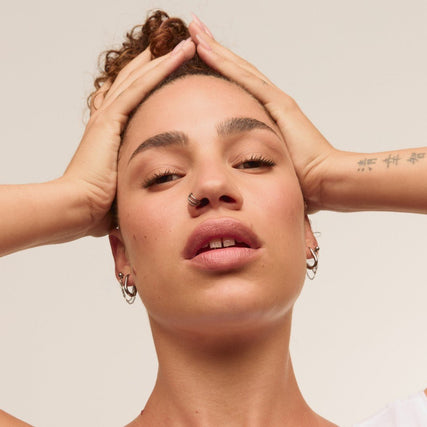
A traditional nostril piercing sits in the crease where the wing of your nose curves in. It's placed through thinner tissue, which is one reason it generally heals more predictably than a high nostril piercing. 

A high nostril piercing sits above that crease, closer to the firmer tissue beside the bridge of the nose. Because the tissue is thicker, it can be a more specialised piercing and may have a longer or slightly more challenging healing period. 

If you regularly wear glasses, mention it during your consultation. Depending on your anatomy and the style of your frames, some glasses can sit close to a high nostril piercing while it's healing. Your piercer can recommend a placement that gives you the look you want while minimising unnecessary irritation. 

A traditional nostril piercing is also the more flexible starting point if you're planning a curated look. Beginning with a lower placement leaves room to add a second or high nostril piercing later, creating a balanced stack. Starting with a high nostril first can make future placement options more limited. 

Choosing your nostril placement: what actually decides where it goes 

No two noses are perfectly symmetrical. One nostril is often slightly higher, wider or more forward than the other, even if it's not obvious at first glance. That's why every piercing starts with an anatomy assessment rather than simply matching the opposite side. 

Your piercer will look at your nose from multiple angles, including straight on and underneath, to find the placement that looks balanced once the jewellery has settled. Sometimes that means the markings aren't perfectly mirrored, but the finished result will appear more symmetrical. 

Your jewellery plans also influence where the piercing is placed. If you know you'll always wear a stud, the placement can be slightly different than if you're planning to switch to a ring later. Rings need enough space to sit comfortably against the nostril without putting unnecessary pressure on the surrounding tissue. 

Taking the time to get the placement right from the beginning gives you more flexibility for future jewellery changes and helps achieve the look you're aiming for. 

Stretching your nostril piercing, or getting the look a different way 

The question behind most "stretch nostril piercing" searches isn't really about gauge sizes. More often, it's "how can I make my piercing stand out?" Stretching is one option, but it's not the only way to achieve a bolder look. 

If you decide to stretch your nostril piercing, it should only be done once the piercing is fully healed. Stretching is a gradual process, increasing one size at a time and allowing the tissue to settle completely before moving to the next size. Mild tightness is normal, but pain, excessive resistance or bleeding are signs to stop and allow more healing time. 

The biggest risks come from stretching too quickly or attempting to stretch a piercing that hasn't fully healed. This can cause irritation, tearing, excessive scar tissue or, in some cases, make it difficult to wear jewellery comfortably in the future. 

For many people, stretching isn't actually the best way to achieve the look they're after. Adding a second nostril piercing, choosing a high nostril placement, switching from a stud to a ring, or selecting more eye-catching jewellery can create a bolder appearance without altering the size of the original piercing. 

If you do choose to stretch, quality jewellery is essential. Implant-Grade Titanium, Surgical Steel and Solid Gold are the best materials because they're designed for long-term wear and minimise the risk of irritation. Plated jewellery should be avoided, as the coating can wear away over time and expose the underlying metal. 

Nose jewellery: studs, rings, dangles and getting the size right 

Every nose piercing at SkinKandy starts with Surgical Steel, the standard jewellery included with your piercing and a well-tolerated choice for most people. If you already know you have a nickel sensitivity, Implant-Grade Titanium or 14K Solid Gold are great upgrade options to discuss with your piercer. 

For a new piercing, a stud is always the best choice. Studs stay more stable during healing, while rings and dangle styles move more with everyday facial expressions, increasing the chance of irritation and extending healing time. 

Once your piercing is fully healed, you'll have plenty more jewellery options to choose from, including: 

  • Flat-back stud: A secure, low-profile option that's comfortable for everyday wear.  
  • Nose Twist: A classic style that's easy to wear and popular for healed piercings.  
  • L-Bend: Simple to insert and remove once your piercing has fully healed.  
  • Segment Ring: A seamless hoop that creates a clean, minimalist look.  
  • Dangle Nose Jewellery: Adds movement and a more decorative style once your piercing is completely healed.  

Most nostril piercings are performed at either 20G or 18G, depending on your anatomy, the jewellery being fitted and your piercer's recommendation. Starting with the correct size makes future jewellery changes much easier. 

If you have a particular look in mind, bring a reference photo to your appointment. Your piercer can recommend whether the style you're after is best achieved with different jewellery, an additional piercing or a different placement, helping you get the look you want from the start.

Healing and aftercare, by placement 

Whichever nostril placement you choose, the aftercare is the same. Clean the piercing with sterile saline twice a day, avoid touching or twisting the jewellery, and keep it out of pools, spas, the ocean and bath water while it's healing. The less irritation the piercing experiences, the smoother the healing process is likely to be. 

Although high and traditional nostril piercings sit in slightly different areas, their healing timelines are similar. At SkinKandy, we generally recommend returning for a Sterile Downsize after 6 to 8 weeks, with full healing taking at least 6 months before changing to rings or other decorative jewellery. 

Sterile Downsize replaces your initial jewellery with a shorter post once the swelling has settled. It's performed using the same sterile process as your original piercing and helps reduce movement, improve comfort and support healthy healing. 

If you're considering stretching your nostril piercing, wait until it's fully healed before discussing it with your piercer. Stretching too early increases the risk of irritation, tearing and prolonged healing, whereas allowing the piercing to mature first gives you the best chance of a successful result. 

FAQs 

What's the difference between a high nostril and a traditional nostril piercing? 

A traditional nostril piercing sits in the crease of the nostril and can usually be fitted with studs, rings and dangle jewellery once fully healed. A high nostril piercing sits higher on the nose, closer to the bridge, and is generally designed for stud-style jewellery rather than rings.

How long before I can stretch my nostril piercing? 

Wait until your piercing is fully healed, which is at least 6 months. Stretching should always be done gradually, increasing one size at a time and allowing the tissue to settle between each size.

Should I get a nose stud or a nose ring for my first piercing? 

A stud is the best choice for a new piercing. Rings and dangle jewellery move more during healing, which can increase irritation and extend healing time.

What gauge is a standard nostril piercing in Australia? 

Most nostril piercings are performed at 20G or 18G. The right starting gauge depends on your anatomy, the jewellery you choose and your piercer's recommendation.

Can stretching a nostril piercing cause problems? 

Stretching too quickly or before the piercing has fully healed can lead to irritation, tearing or excess scar tissue. Waiting until it's healed and stretching gradually gives the best chance of a successful result.

Do I need a different piercing for a dangle style? 

No. A traditional nostril piercing can usually wear dangle jewellery once fully healed. High nostril piercings are generally positioned too high for this style and are most commonly worn with studs.

Find Your Nearest Studio

If you're ready to get pierced — or just want an anatomy check before you commit — see our piercing menu for the full list of placements and pricing. We have 100+ studios across Australia and New Zealand.

Walk-ins are welcome at most studios. For a stacking consultation or a more involved placement, booking ahead gives you more time with the team.